Stand inside the Alhambra, or the Selimiye Mosque at Edirne, or a small Qajar shrine in Shiraz, and at some point your eye will stop trying to find where a pattern begins. There is no beginning. There is no end. The vine continues.
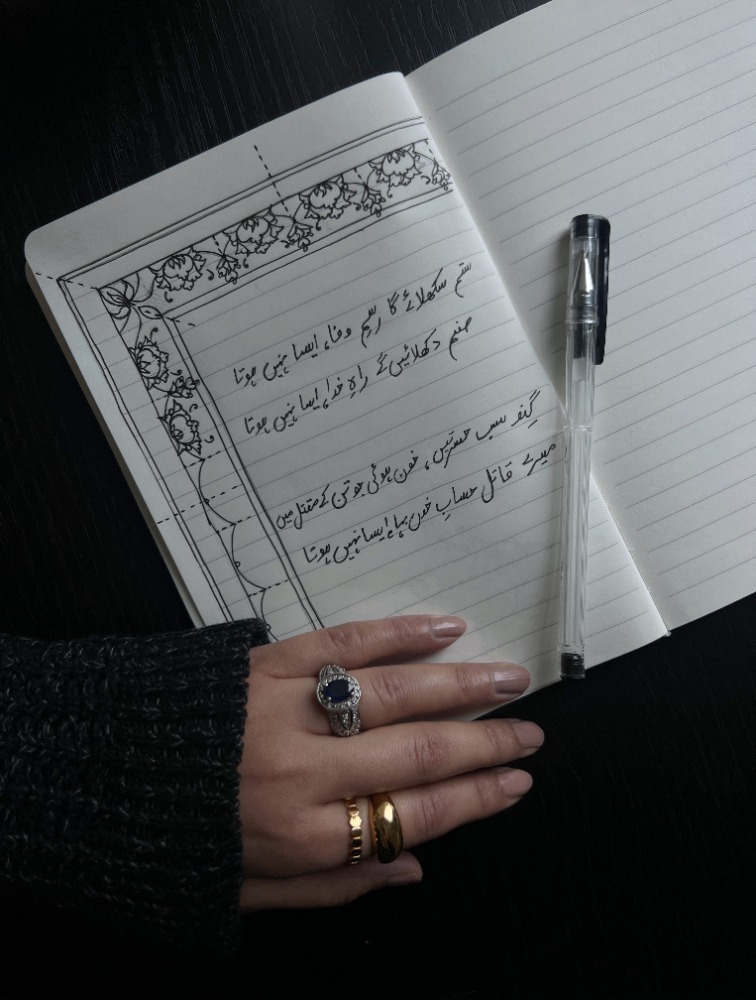
This is not a lack of imagination. It is the whole imagination, a deliberate, centuries-refined refusal to close a line. The arabesque, which the Arabs called islimi and the Persians adapted endlessly, is the most sustained meditation in any tradition on what it means to render the infinite with a finite instrument.
What is the arabesque, exactly?
At its simplest, the arabesque is a continuous stylized vine, a stem that splits into leaves and flowers that themselves branch further, never returning to the stem they came from, and never coming to a full stop.
To Islamic theologians and craftsmen alike, the arabesque was an argument. It said: every particular in creation is a node in a larger weave. The individual leaf is beautiful, but it is only beautiful because of what it is connected to. The pattern is the real thing. The leaf is a participation in it.
The artist submits his individual will to the logic of the pattern. He does not invent; he continues. He does not "express himself"; he adds a leaf.
Infinite pattern, finite hand
The arabesque's deepest teaching is this: the line does not have to arrive somewhere to be beautiful. The vine does not owe the eye a resting place. Completeness is not closure. What looks, to an impatient viewer, like a pattern that never finishes, is actually a pattern that refuses to insult the infinite by pretending it could be bounded.
You are a finite hand drawing a small part of something very large. This is what the arabesque teaches. It is a lesson for the artist, and it is a lesson for the soul.
The rabt of the arabesque is connection itself, the simple, relentless insistence that every leaf is part of a vine, and every vine is part of a larger rule, and the infinite source behind the rule.